
How Long Might Your Retirement Income and Savings Need to Last—and Why It Matters

When people think about retirement planning, they often focus on when they want to retire. But there’s another question that may be just as important:
How long might your retirement income and savings need to last?
For many Americans, retirement can span 20, 25, or even 30 years. Understanding this timeline can help you make more informed decisions about income, spending, retirement planning considerations, and how to protect your financial confidence over time.
Why Retirement Is Lasting Longer Than Many Expect
Advances in healthcare and lifestyle may contribute to longer life expectancy, which means many people may spend a significant portion of their lives in retirement.
That’s good news — but it also means your retirement savings and income may need to last longer than you anticipated and initially planned for.
A longer retirement can bring:
- More time for travel, family, and personal goals
- Increased healthcare and living expenses later in life
- A greater need for reliable income over time
Planning with longevity in mind may help individuals prepare for future income and expense needs.
Life Expectancy vs. Planning Horizon
Life expectancy statistics are averages — but retirement planning is personal.
Many people plan to age 85 or 90, yet some individuals live well beyond that. Rather than guessing an exact age, many planners encourage thinking in terms of a planning horizon — preparing for income needs that may last longer than expected.
This approach helps ensure:
- You don’t outlive your income
- Market volatility has less impact on long-term planning goals
- Essential expenses are covered, even later in retirement
The Risk of Outliving Your Savings
One of the most common retirement concerns is whether retirement savings will last throughout retirement. This isn’t about poor planning — unexpected factors can affect retirement outcomes.
Market fluctuations, unexpected expenses, and longer lifespans can all put pressure on retirement savings. That’s why many retirees look for ways to balance flexibility with income reliability.
If you’re exploring how different tools may help support income throughout retirement, “The Role of Annuities in a Diversified Retirement Portfolio” provides a helpful overview of how annuities may complement other income sources.
How Certain Guaranteed Income Features May Help Address Longevity Concerns
Some retirement income sources are designed to provide more predictable income features, regardless of market conditions. These may help cover essential expenses and reduce the need for frequent withdrawal adjustments.
For example:
- Guaranteed income options may help provide predictable cash flow
- Principal protection features may help protect contract value from market downturns
- Tax-deferred growth may support longer-term planning
If you’re new to annuities or want to better understand how they work, “12 Essential Questions About Multi-Year Guaranteed Annuities (MYGAs)” offers a clear, consumer-friendly starting point.
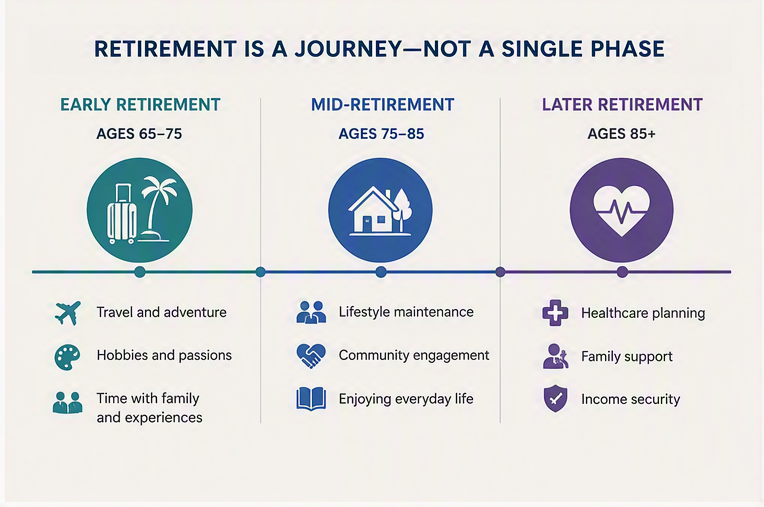
Planning for Different Phases of Retirement
Retirement isn’t one long, identical phase. Income needs often change over time:
- Early retirement: More discretionary spending (travel, hobbies)
- Mid-retirement: Stable spending with a focus on lifestyle maintenance
- Later years: Increased healthcare and care-related costs
Thinking ahead about how income may need to adapt can help you create a more flexible and resilient plan.
If market swings are a concern as you think about the long term, you may find “Protecting Yourself Against Crashing Waves” helpful — it discusses how protection-focused strategies can help navigate volatility.
Questions to Ask Yourself
As you think about how long your retirement might last, consider these questions:
- How long do I want my income to last — and have I planned beyond averages?
- What income do I already have that’s predictable or guaranteed?
- How comfortable am I adjusting spending if markets fluctuate?
These questions don’t require immediate answers — but they may help guide more thoughtful conversations with a financial professional.
Looking Ahead
Retirement planning isn’t about predicting the future perfectly. It’s about preparing thoughtfully, so you can enjoy retirement with greater confidence and a clearer understanding of your financial considerations — no matter how long it lasts.

Disclaimers
The Harbourview MYGA (Generic Policy Form ICC19 OLA SPDA) and Harbourview FIA (Generic Policy Form ICC19 OLA FIA) are single premium deferred annuities. May not be available in all states.
OCEANVIEW ANNUITIES ARE PRODUCTS OF THE INSURANCE INDUSTRY AND NOT GUARANTEED BY ANY BANK NOR INSURED BY THE FDIC OR NCUA/NCUSIF OR ANY OTHER FEDERAL GOVERNMENTAL AGENCY. MAY LOSE VALUE. NO BANK/CREDIT UNION GUARANTEE. NOT A DEPOSIT. MAY ONLY BE OFFERED BY A LICENSED INSURANCE AGENT. GUARANTEES ARE SUBJECT TO THE CLAIM PAYING ABILITY OF THE ISSUING INSURANCE COMPANY.
Annuities issued by Oceanview Life and Annuity Company, 1331 17th Street, Suite 1050, Denver, CO 80202. In California, doing business as Oceanview Life and Annuity Insurance Company www.oceanviewlife.com.
Annuities are generally designed as long-term retirement solutions and have certain limitations. They are generally not intended to replace emergency funds, serve as income for day-to-day expenses, or support short-term savings goals. Please refer to the contract for complete details, including features, limitations, and charges.
This material is a general description intended for general public, educational use. Oceanview Life and Annuity Company is not providing investment advice for any individual or in any individual situation, and therefore nothing in this correspondence should be read as such.
Neither Oceanview Life and Annuity Company nor any of its representatives may provide tax or legal advice. Clients should consult their own qualified tax or legal advisors.